
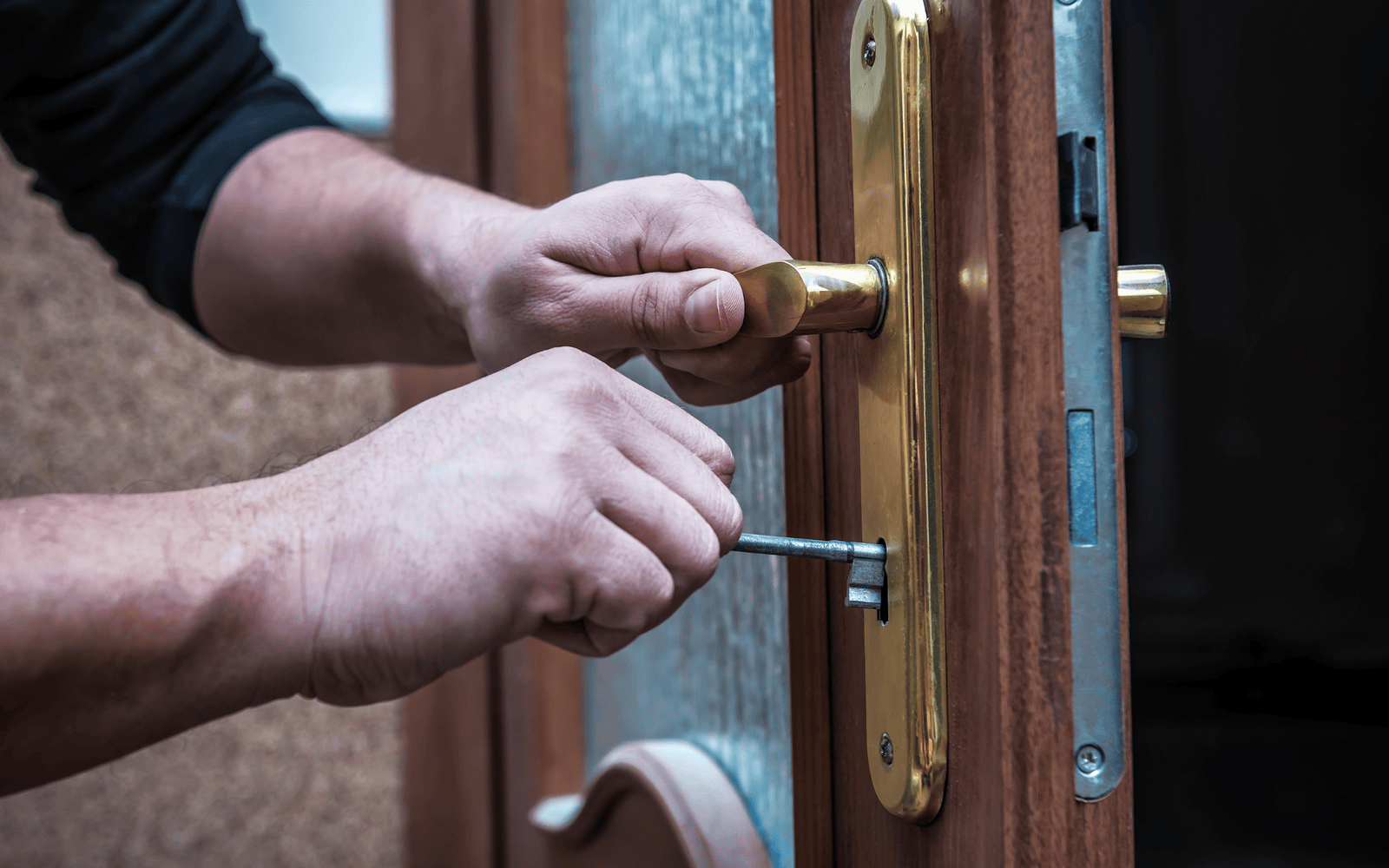
Every summer, without fail, we get a wave of calls from Atlanta homeowners dealing with the same problem. The front door that worked perfectly fine all winter suddenly drags against the frame, won’t latch properly, or takes a firm shoulder to get closed. By August, some doors won’t shut at all without a fight.
This isn’t a coincidence and it isn’t bad luck. It’s wood doing exactly what wood does in a subtropical climate — responding to moisture. Atlanta’s summer humidity levels regularly sit between 65–80%, and when that moisture gets into a wood door, the wood expands. The physics are simple. The solutions are specific. And the mistakes homeowners make trying to fix it on their own often cause more damage than the swelling did.
After 13 years working on wood doors across Metro Atlanta, I’ve seen every version of this problem — from seasonal swelling that resolves on its own in October to doors so badly warped they needed replacing. This post covers why it happens here specifically, how to tell the difference between swelling and warping, which fixes actually work, and when the problem is something other than humidity entirely.
Why Atlanta’s Summer Is Uniquely Hard on Wood Doors
Most cities have humidity. Atlanta’s combination of factors makes it particularly aggressive on exterior wood.
Summer in Atlanta brings sustained high humidity — not just occasional rainy days but weeks of ambient moisture in the air. Average relative humidity in July and August runs between 70–80% in the morning and rarely drops below 55% even on sunny afternoons. Wood is hygroscopic, meaning it absorbs moisture from the surrounding air constantly. In sustained high humidity, a wood door absorbs moisture across its entire surface simultaneously — not just on rainy days, but every day the humidity is elevated.
The second factor is the temperature differential between inside and outside. Atlanta homes run air conditioning heavily through summer. The outside of a front door sits in 80% humidity and 95-degree heat. The inside faces a 72-degree, climate-controlled interior. One side of the door is absorbing moisture aggressively. The other side is in comparatively dry air. This differential — one side swelling while the other side stays relatively stable — is the primary cause of warping, and it’s worse in Atlanta than in most northern cities simply because the temperature and humidity differential between inside and outside is more extreme.
The third factor is that Atlanta’s summer is long. This isn’t a two-week humid period — it runs from May through September. Five months of sustained moisture exposure gives wood doors more time to absorb, expand, and in some cases permanently deform than a shorter humid season would.
Swelling vs. Warping — They’re Not the Same Problem
This distinction matters because the fix is completely different.
What Swelling Looks Like
Swelling is temporary expansion across the whole door caused by moisture absorption. The door gets bigger — not in a dramatic way, but enough to change how it fits in the frame. A door that swelled from humidity will typically stick at the top corner opposite the hinges first, because that’s where the door has the least clearance. It may drag against the threshold at the bottom. The latch may not reach the strike plate properly.
The key characteristic of swelling is that it’s relatively uniform and it’s reversible. When humidity drops in fall, a swollen door often returns to its normal size and starts working properly again without any intervention. If your door sticks every summer and works fine every winter, you’re dealing with seasonal swelling — not a structural problem.
What Warping Looks Like
Warping is permanent deformation — the door has twisted, bowed, or cupped and does not return to its original shape when humidity changes. A warped door typically has a gap somewhere along the frame even when closed — usually a diagonal gap from one corner to the opposite corner. You can see daylight through it. It won’t seal properly.
Warping is caused by uneven moisture exposure over time — typically when one face of the door absorbs significantly more moisture than the other, or when the finish on one side fails while the other remains protected. The moisture imbalance pulls the wood in two directions. Once warping passes a certain point, it’s permanent — the wood fibers have rearranged.
A door can be swollen and warped at the same time. Swelling is usually seasonal and correctable. Warping requires assessment to determine whether it’s within the range that can be corrected or whether the door needs replacing.
| Problem | Cause | Reversible? | Fix |
|---|---|---|---|
| Swelling | Seasonal humidity absorption | Yes — usually resolves in fall | Finish maintenance, weatherstrip adjustment |
| Minor warp | Uneven moisture exposure, one-side finish failure | Sometimes | Hinge adjustment, frame correction |
| Severe warp | Long-term uneven moisture, structural deformation | No | Door replacement |
| Frame shift | Foundation movement or frame settling | No — different problem | Frame repair or replacement |
The Real Cause of Sticking — It’s Not Always the Door
Before adjusting or planing anything, it’s worth understanding exactly where the sticking is happening. The door itself is only one of several possible causes.
The Door Has Swollen
This is the most common cause in Atlanta summers. The door itself has expanded and no longer fits the frame properly. The sticking point is usually at the top corner away from the hinges — the point furthest from the pivot that has the least clearance.
The Hinges Have Sagged
Heavy doors — solid mahogany and solid oak entry doors are significantly heavier than hollow-core doors — put real stress on hinge screws over time. If the hinge screws have loosened or the mortises have widened, the door sags on the hinge side. A sagging door drags at the bottom on the latch side and has a gap at the top on the latch side. This looks like a warping problem but isn’t — tightening or replacing the hinge screws with longer ones that reach into solid framing often fixes it completely.
The Frame Has Shifted
Atlanta’s clay soil expands significantly when wet and contracts when dry. Homes built on this soil move more than homes in other regions. A door frame that was perfectly plumb when installed can shift enough over years of seasonal soil movement to cause sticking that has nothing to do with the door at all. If your door started sticking after a particularly wet or dry season and you haven’t had the problem before, frame shift is worth checking. A level on the hinge-side frame member tells you quickly whether the frame is still plumb.
The Weatherstripping Is Too Tight
New weatherstripping installed without accounting for summer swelling can cause a door to stick in summer even though the door and frame are both fine. Weatherstripping that seals perfectly in November may compress the door hard enough in August — when the door is slightly swollen — that it won’t close without force.
Why Planing the Door Down Is Usually the Wrong Fix
This is the most common mistake homeowners and inexperienced contractors make. The door sticks. They plane or sand down the edge where it’s sticking. In September when the wood contracts, there’s now a visible gap where the door doesn’t seal the frame properly. In November, cold air comes through. The following summer, the same door sticks again because the underlying cause — a finish that’s allowing moisture to enter the wood — hasn’t been addressed.
Planing removes wood permanently. It addresses the symptom — the door being too big for the frame — without addressing the cause — the finish failing and allowing the wood to absorb humidity in the first place.
A door with an intact, properly sealed finish absorbs moisture significantly more slowly than a door with a degraded finish. The finish is the moisture barrier. When it breaks down — cracking, peeling, checking — the wood underneath is exposed to Atlanta’s humidity directly. The more finish failure, the more moisture the wood absorbs, the more it swells.
The correct sequence is to address the finish first. A door that’s properly refinished and sealed will swell less in subsequent summers. In many cases, a door that’s been sticking for years works normally the summer after a proper refinish because the moisture uptake is controlled.
Fixes That Actually Work — In Order of What to Try First
Step 1 — Check the Hinges
Before touching anything else, open the door fully and look at the hinge screws. Try tightening them. If any spin freely without biting, the screw holes have stripped — pack them with wooden toothpicks and wood glue, let it cure, then re-drive the screws. This takes fifteen minutes and fixes a significant percentage of sticking door calls we get.
While you’re there, check whether the door is hanging plumb. Close it and look at the gap between the door and frame all the way around. If the gap is consistent — roughly even top and bottom, even on both sides — the door is hanging correctly. If the gap is wider at the top on one side and narrower at the bottom on the same side, the door has sagged on the hinge side.
Step 2 — Identify Where It’s Actually Sticking
Run a piece of paper around the perimeter of the closed door. Where the paper drags or won’t pull through is where the door is contacting the frame. This tells you exactly where the clearance problem is — which determines what to do about it.
If it’s sticking at the top latch-side corner: classic swelling or hinge sag. If it’s sticking at the bottom along the threshold: swelling at the base, often combined with a failed bottom seal. If it’s sticking along the entire latch side: the door has warped or the frame has shifted.
Step 3 — Address the Finish
If the finish on your door is visibly degraded — cracking, peeling, gray or chalky appearance — refinishing is the most effective long-term fix for recurring summer swelling. A properly sealed door absorbs significantly less moisture than one with a failing finish. In Atlanta’s climate, marine-grade UV varnish holds up meaningfully better than standard exterior polyurethane because it stays flexible through temperature cycles rather than becoming brittle and cracking.
This doesn’t fix a door that’s sticking today. But it prevents the same door from swelling as severely next summer.
Step 4 — Plane or Sand As a Last Resort
If the door is sticking badly enough that it can’t be closed properly and refinishing alone won’t solve it in the short term, carefully removing material from the sticking point is sometimes necessary. The important cautions: only remove material from the edge where contact is confirmed by the paper test. Remove as little as possible — a pass or two with a hand plane rather than aggressive sanding. Seal the raw wood immediately after planing, before moisture gets into the exposed end grain. And address the finish properly afterward so the same problem doesn’t repeat.
What Not to Do
Don’t use a heat gun on a stuck door to force it closed. Don’t plane the door without sealing the raw wood afterward. Don’t ignore a door that won’t seal properly — a door that doesn’t close tightly is a security issue as well as an energy efficiency problem. Don’t assume the problem is the door if you haven’t checked the hinges and frame first.
When the Problem Is Beyond Repair
A door that has warped severely — where there’s a visible gap along the frame when the door is closed, where daylight is visible at the corners — has deformed past the point where adjustment or refinishing will fix it. At this point the wood has permanently rearranged its structure on one side relative to the other.
The test is simple. Close the door and look at the gap around the perimeter. If the gap is dramatically uneven — large at one corner, tight at the opposite corner — and this doesn’t change seasonally, the door has warped. If the screwdriver press test finds the wood soft or structurally compromised in multiple areas, repair work may not be sufficient to restore a properly sealing door.
In these cases, replacement is the honest answer. We’ll tell you this directly during an assessment rather than taking a refinishing job on a door that won’t perform properly afterward.
How to Prevent This Problem Going Forward
Maintain the Finish
The finish is the only thing standing between Atlanta’s humidity and your door’s wood. A door with an intact, properly applied marine-grade varnish absorbs a fraction of the moisture that a door with a failed finish absorbs. Inspect the finish annually — look for surface checking, gray or chalky appearance, or any areas where the finish has lifted at edges. Address deterioration early with a maintenance coat rather than waiting for a full refinish.
Seal the Bottom Edge
The bottom edge of the door — the end grain — is the most vulnerable entry point for moisture. End grain absorbs water faster than face grain. A door with a properly sealed bottom edge and a well-fitted threshold seal absorbs significantly less moisture from ground-level humidity and rain splash than one where the bottom is exposed or the threshold seal has worn out.
Seal All Six Sides
A door should be sealed on all six faces — front, back, top, bottom, and both side edges. Many refinishing jobs seal only the visible faces. Unsealed edges and the top of the door allow moisture to wick into the wood from directions where it’s not visible. A properly done refinishing job seals every surface.
Consider a Storm Door
A storm door in front of a wood entry door dramatically reduces the wood door’s exposure to direct humidity, rain, and UV. On south and west-facing entries in Atlanta, a storm door can extend the life of a refinish by several years and significantly reduce seasonal swelling.
Frequently Asked Questions
My door sticks every summer and fixes itself every winter — do I need to do anything?
Seasonal swelling that resolves on its own indicates the door is responding normally to humidity but the clearance in the frame is tight. If it’s just an annoyance and the door still closes and latches, you can leave it. If it’s getting progressively worse each summer — sticking earlier in the season or more severely — the finish is likely deteriorating and allowing more moisture in each year. Address the finish before the problem becomes structural.
Can I fix a sticking door myself?
The hinge check and tightening is a legitimate DIY fix. The paper test to find the sticking point is useful DIY diagnosis. Planing a door is manageable for a homeowner with the right tools if they’re careful about sealing the raw wood afterward. Refinishing is a professional job in Atlanta’s climate — not because the application is impossibly complex, but because the preparation (full strip, repair assessment, progressive sanding) determines whether the finish actually holds up or fails within a year.
Why does my new door stick but my old one didn’t?
New solid wood doors need to acclimate to their environment before installation. A door installed during a dry winter may swell noticeably in its first Atlanta summer as it adjusts to local humidity levels. This is normal and usually less pronounced in subsequent years. If a new door is sticking badly in its first summer, check that all six sides were sealed before installation — some manufacturers seal only the face grain.
My door sticks but the finish looks fine — what else could it be?
Check the hinges first. Then check the frame with a level for plumb. Foundation movement in Atlanta’s clay soil is a genuine and underappreciated cause of doors that suddenly start sticking without obvious finish failure. If the frame has shifted, refinishing the door won’t fix the sticking.
Can you fix a door that’s sticking without removing it?
For minor hinge adjustments and weatherstripping, yes. For refinishing or planing, the door comes off. Working on a door in the frame produces inconsistent results — you can’t access the edges properly, you can’t assess the wood condition fully, and you can’t seal all six sides without removal.