
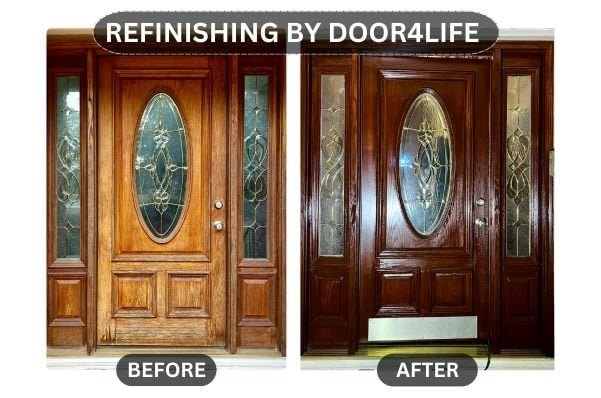
This is the question we get more than almost any other. Someone just paid for a refinishing job — or they’re about to — and they want to know how long before they’re doing it again.
The honest answer is: it depends on three things. The finish used, where the door faces, and whether anyone catches early wear before it becomes a problem. After 13 years of working on wood doors across Atlanta, I’ve seen $800 refinishing jobs last nine years and $400 jobs start failing in eighteen months. The difference almost never comes down to the wood.
Why Atlanta Is Harder on Door Finishes Than Most Cities
Atlanta sits in a humid subtropical climate. Average summer humidity runs between 65–80%, and the city receives around 50 inches of rain annually — more than Miami. What makes Atlanta particularly destructive for door finishes is the combination: intense UV from direct Georgia sun, high ambient moisture, and wide temperature swings between seasons.
Wood is hygroscopic — it absorbs and releases moisture constantly. In Atlanta, a south or west-facing door can go through dozens of moisture cycles in a single month during summer. Each cycle causes the wood to expand slightly as it absorbs humidity and contract as it dries. Over time, this movement works against the finish layer. Once a crack appears — even a hairline crack — moisture gets under the finish and the breakdown accelerates.
A door with an overhang or covered porch can last significantly longer than the same door in direct sun and rain exposure. This is the single most controllable variable, and it’s the first thing we look at when someone asks how long their refinishing should last.
What Actually Determines How Long a Refinish Lasts
Before getting to numbers, these are the four factors that matter most in Atlanta’s climate:
Finish quality
This is where the biggest gap exists between professional and DIY work. Standard exterior varnishes sold at hardware stores are formulated for average conditions. Atlanta’s UV intensity and humidity levels are not average. A standard polyurethane varnish in direct Atlanta sun typically starts showing UV degradation — fading, chalking, micro-cracking — within 18 to 24 months on south-facing doors.
Marine-grade UV varnish is formulated for far more extreme environments — boats and coastal structures that deal with salt spray, direct sun, and constant moisture. Applied properly to a wood door, it performs at a different level in Atlanta’s climate because it was built for worse.
Door orientation
South-facing and west-facing doors receive the most direct UV exposure. A south-facing door with no overhang in Atlanta gets several hours of direct sun through the hottest part of the day. West-facing doors catch late afternoon sun — the most intense UV period. North-facing doors, by comparison, rarely receive direct sun and typically last significantly longer between refinishes.
Whether the strip was complete
A refinish done over an existing finish — without stripping back to bare wood — will fail faster than one done properly. Old finish layers trap moisture, and the new finish bonds to the old layer rather than to the wood. We’ve assessed doors that were refinished every two years and still looked rough, because the previous company was layering over existing finish rather than starting clean. A full strip takes longer and costs more, but the result lasts.
Early maintenance
A professionally refinished door doesn’t need to be fully stripped and redone every time the finish shows wear. A maintenance coat — cleaning, light sanding of worn areas, and a fresh varnish layer — can extend a refinish significantly if done before the finish fully fails. The window for this is when you notice slight dulling or minor surface checking, not after the finish has cracked through to the wood.
How Long to Expect — By Finish Type
| Finish Type | Atlanta Lifespan (South/West Facing) | Atlanta Lifespan (North/East Facing) | Maintenance Required |
|---|---|---|---|
| Standard polyurethane (DIY) | 1–2 years | 2–3 years | Annual inspection |
| Professional exterior varnish | 2–3 years | 3–4 years | Every 2 years |
| Marine-grade UV varnish (professional) | 4–6 years | 6–9 years | Every 3 years |
| Door4Life UV marine varnish | 5–7 years (south facing) | 7–10 years | Check every 2–3 years |
These are realistic ranges based on Atlanta conditions, not manufacturer claims. A north-facing mahogany door refinished with marine-grade varnish and caught for a maintenance coat at year 4 can genuinely go 10 years before needing a full strip and redo. A south-facing pine door with a standard finish applied over existing layers — we’ve seen those fail inside a year.
The Signs That Tell You It’s Time
You don’t need to wait for the finish to visibly peel before doing something about it. By that point, moisture has usually been getting into the wood for a season or two already.
Watch for surface checking — fine cracks running along the grain. This is the finish telling you it’s lost flexibility and moisture is getting underneath. On a south-facing Atlanta door, you might see this starting at year 2–3 with a standard finish, and year 4–5 with marine-grade.
Fading and graying is UV degradation. The stain color starts looking washed out and the wood takes on a gray or silver tone. This is surface-level damage that responds well to a maintenance coat if caught early.
Peeling or lifting at edges — around the lock hardware, along the bottom rail, or at panel edges — means moisture has gotten under the finish. At this point you’re looking at a full strip and redo rather than a maintenance coat.
Soft spots on the wood itself mean moisture has been in long enough to start breaking down the wood fibers. This crosses from a refinishing issue into a wood repair issue. The longer it’s left, the more expensive it becomes.
What a Realistic Maintenance Schedule Looks Like in Atlanta
For a south or west-facing wood door refinished with marine-grade UV varnish:
Year 1–2: No action needed beyond keeping the door clean. Avoid pressure washing directly at the door.
Year 2–3: Inspect the finish. Look for surface checking, fading, or any softness at the bottom rail and around hardware. If the finish looks solid and the wood feels firm, you’re fine for another year.
Year 3–4: Most south-facing doors will benefit from a maintenance coat at this point — light sanding of worn areas, fresh varnish layer. This is a fraction of the cost of a full refinish and extends the life by 2–3 years.
Year 5–7: Depending on exposure and how well the maintenance coat held, you’re looking at either another maintenance coat or a full strip and redo. A door that’s been well maintained will only need the redo because the stain color has faded significantly, not because the wood is compromised.
For north or east-facing doors with marine-grade varnish, push each of these stages out by 2–3 years.
Why the Same Door Can Last Very Different Amounts of Time
Two doors in the same Atlanta neighborhood, same wood species, same refinishing company — one lasts six years, one lasts three. The variables we see most often:
A door with a metal storm door in front of it lasts significantly longer. The storm door blocks most of the direct UV and rain contact, and the wood door behind it can go 8–10 years without a full refinish.
A door that gets cleaned regularly — wiped down after heavy rain, kept free of pollen and debris buildup — lasts longer because pollen and organic material trap moisture against the finish surface.
A door where the threshold seal has failed at the bottom lets water wick up through the end grain constantly. Even a perfect finish on the face of the door won’t save the bottom rail if water is getting in from underneath.
Frequently Asked Questions
Does the type of wood affect how long refinishing lasts?
Yes, but less than most people think. Mahogany is naturally more resistant to moisture and rot than pine or fir, so it handles finish failure better — meaning the window between finish failure and wood damage is wider. The finish itself degrades at roughly the same rate regardless of wood species. What changes is how quickly the wood suffers once the finish fails.
Can I extend my refinishing lifespan myself between professional visits?
Yes. Keeping the door clean, applying a quality paste wax annually on the surface, and touching up small chips or cracks with matching varnish as soon as you see them all extend the life of a professional refinish. Don’t use silicone-based products — they interfere with adhesion if the door needs a maintenance coat later.
How do I know if I need a full strip or just a maintenance coat?
Press a fingernail into the finish on the worst-looking area. If the finish is still hard and bonded, a maintenance coat is likely sufficient. If the finish crumbles, lifts, or separates from the wood, you need a full strip. If the wood underneath feels soft at all, that’s a wood repair issue first.
Does refinishing in summer vs fall make a difference in how long it lasts?
It does. High humidity during application affects how well the finish bonds and cures. Spring and fall are the best seasons in Atlanta for refinishing — temperatures between 50–80°F and lower humidity give the varnish the best curing conditions. Summer refinishing can be done but requires more care during application.
What’s the difference between a maintenance coat and a full refinish?
A full refinish strips the door back to bare wood, addresses any surface damage, applies stain, and builds up multiple finish coats from scratch. A maintenance coat lightly sands the existing finish, cleans the surface thoroughly, and applies one or two fresh varnish coats over what’s still sound. Maintenance costs significantly less and is appropriate when the finish is worn but still bonded to the wood.