
Interior doors are no longer just functional dividers in modern homes. They’ve become design statements that influence the flow, light, and character of every room. In Atlanta, homeowners are rethinking door choices as part of larger renovation projects, and the latest trends reflect a shift toward cleaner lines, bold contrasts, and personalized finishes.
According to the National Association of Home Builders, 63% of homeowners planning renovations in 2024 prioritized interior updates that increase both visual appeal and property value. Doors fall squarely in that category. This article walks through the trending styles, finishes, and practical approaches Atlanta homeowners are using right now to refresh their interiors without full-scale remodels.
What Are the Top Interior Door Trends in Atlanta Right Now?
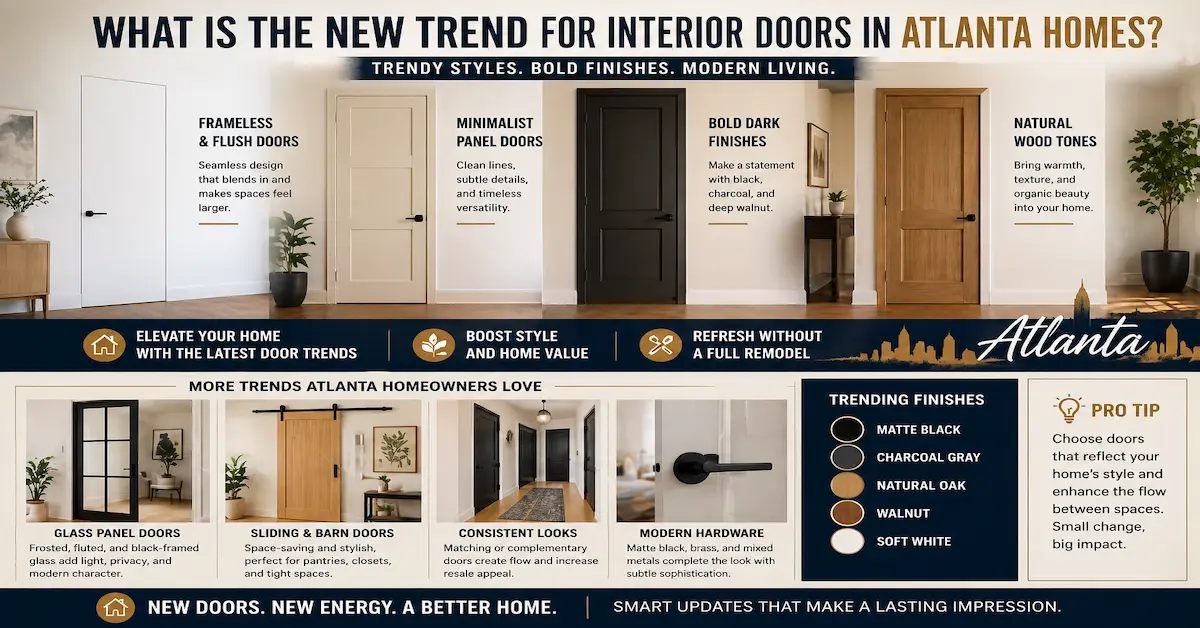
The biggest trends in Atlanta interior doors include frameless designs, minimalist panel styles, bold dark finishes, and natural wood tones that bring warmth without clutter. Homeowners want doors that either disappear into the wall or stand out as focal points.
Frameless doors, also called invisible or flush doors, create seamless transitions between rooms. These doors sit flat against the wall with no visible trim, which makes small spaces feel larger and supports modern open-concept layouts common in Atlanta condos and renovated bungalows.
Minimalist panel doors remain popular for their versatility. Clean, flat panels with subtle vertical grooves work in both contemporary and transitional interiors. These doors offer just enough detail without the heaviness of traditional raised-panel styles.
Dark finishes like charcoal, black, and deep walnut are gaining traction. Atlanta homeowners use these tones to create contrast against light walls and floors, adding depth without additional decor. It’s a quick way to modernize older homes without replacing flooring or cabinetry.
Natural wood finishes are also trending, especially in homes that lean toward organic or Scandinavian-inspired design. Light oak, ash, and maple bring warmth and texture while maintaining simplicity. For homeowners considering a complete refresh, a door refinishing service can restore existing wood doors to match these current aesthetics.
Why Are Homeowners in Atlanta Choosing Frameless and Flush Doors?
Frameless and flush doors are chosen because they visually expand space, reduce visual clutter, and align with the minimalist direction many Atlanta interiors are taking.
In smaller Atlanta homes and loft conversions, every design choice counts. Frameless doors eliminate the visual break created by traditional trim and casings. That continuity makes walls appear longer and ceilings higher, which is especially useful in 1,200 to 1,500 square foot homes common in neighborhoods like Inman Park and Virginia-Highland.
Flush doors also simplify maintenance. There are no grooves or raised panels to collect dust, and touch-ups are easier when the door surface is flat. Homeowners who value low-maintenance interiors appreciate this practical benefit alongside the aesthetic one.
Another reason is paint flexibility. Flush doors can be painted the same color as the walls, creating an almost invisible effect. Or they can be painted in a contrasting color to serve as architectural accents. This versatility makes them suitable for a wide range of design styles.
How Are Dark and Bold Door Finishes Being Used in Atlanta Homes?
Dark and bold finishes are used strategically to create visual contrast, define spaces, and add a layer of sophistication without additional furniture or decor.
Black interior doors have become a signature look in renovated Atlanta homes. They work especially well in spaces with white or light gray walls, hardwood floors, and simple furnishings. The contrast is immediate and doesn’t require patterns or textures to make an impact.
Charcoal and deep espresso finishes offer a softer alternative to pure black. These tones still provide contrast but feel slightly warmer and less stark, which suits traditional Atlanta architecture like Craftsman bungalows and Tudor revivals.
Homeowners are also using dark doors selectively. Instead of painting every door in the house, they apply bold finishes to high-visibility areas like the master bedroom, home office, or powder room. This creates focal points without overwhelming the interior.
For those working with existing wood doors, professional door staining experts can achieve rich, even tones that highlight the wood grain while darkening the overall appearance. This approach preserves the material quality while updating the look.
What Role Does Natural Wood Play in Current Door Trends?
Natural wood brings warmth, texture, and organic character to interiors that might otherwise feel too sterile or cold. It balances minimalism with livability.
Light wood tones like white oak and ash are especially popular in Atlanta homes that follow Scandinavian or modern farmhouse styles. These woods have visible grain patterns that add visual interest without heavy staining or finishing. They pair well with neutral palettes and natural materials like linen, stone, and matte metals.
Walnut and cherry offer deeper, richer tones for homeowners who want natural wood but prefer something less blonde. These woods age well and develop character over time, which appeals to buyers focused on long-term value.
Natural wood doors also support sustainability trends. Many Atlanta homeowners now prioritize materials that are renewable, locally sourced, or reclaimed. Wood fits that profile better than synthetic alternatives, especially when finished with low-VOC products.
Maintaining natural wood doors requires occasional care. Services like door varnishing can protect the wood from moisture and wear while keeping the finish fresh and clear.
Are Glass Panel Doors Still Relevant in Modern Atlanta Interiors?
Glass panel doors remain relevant, but the style has shifted. Frosted, fluted, and black-framed glass panels are replacing traditional clear glass inserts.
Frosted glass offers privacy while still allowing light to pass between rooms. This makes it ideal for home offices, bathrooms, and closets where full visibility isn’t necessary but natural light is valued.
Fluted glass, which features vertical ridges, adds texture and a vintage-modern feel. It’s commonly used in pantry doors, laundry rooms, and between kitchens and dining areas. The ridges diffuse light softly and create a subtle decorative effect.
Black-framed glass doors are trending in loft-style and industrial interiors. The frames mimic steel factory windows and pair well with exposed brick, concrete floors, and open shelving. These doors work particularly well in converted warehouse spaces and modern new builds in areas like the Westside.
How Do Interior Door Trends Differ Between Atlanta Neighborhoods?
Interior door trends vary by neighborhood based on home age, architectural style, and the demographic profile of residents.
In historic neighborhoods like Grant Park and Druid Hills, homeowners lean toward updated classic styles. Panel doors with clean lines, painted in soft whites or grays, preserve the traditional character while feeling current. Dark stains on original wood doors are also common in these areas.
In newer developments like Brookhaven and Sandy Springs, frameless and minimalist doors dominate. These neighborhoods feature open-concept floor plans and contemporary finishes, so doors that blend into walls or create subtle contrast fit the overall aesthetic.
Intown neighborhoods like Old Fourth Ward and Cabbagetown see more experimentation. Homeowners here often mix styles, using bold colors, reclaimed materials, and custom designs that reflect personal taste more than resale trends.
For homeowners in Metro Atlanta suburbs, door refinishing Metro Atlanta services offer localized expertise and faster project turnaround compared to general contractors.
What Should Atlanta Homeowners Consider Before Changing Interior Doors?
Before changing doors, homeowners should evaluate existing door sizes, frame conditions, and how the new style will interact with flooring, trim, and wall colors.
Standard interior door sizes in Atlanta homes are typically 80 inches tall and 30 to 36 inches wide. Custom or non-standard sizes may require new frames or adjustments, which increases cost and project time.
Frame condition matters. If the existing frame is damaged, warped, or painted over multiple times, it may need replacement or significant prep work. Skipping this step can result in poor door alignment and gaps that affect insulation and sound control.
Style consistency is another consideration. Homeowners should decide whether all doors will match or if certain rooms will feature accent styles. Consistency tends to increase resale value, while selective variation allows for more personality.
Paint and finish coordination is critical. A door that looks great in isolation may clash with existing trim or cabinetry. Testing samples in the actual space under natural and artificial light prevents costly mistakes.
| Door Style | Best For | Price Range |
| Frameless/Flush | Modern, small spaces | $250–$600 per door |
| Minimalist Panel | Transitional, versatile | $150–$400 per door |
| Dark Stained Wood | High contrast, bold style | $200–$500 per door |
| Natural Wood | Warm, organic interiors | $300–$700 per door |
| Glass Panel | Light flow, semi-private | $350–$800 per door |
Can Garage Doors Follow the Same Design Trends as Interior Doors?
Garage doors can follow similar trends, especially when the garage is attached or visible from living spaces. Cohesive design between interior and exterior elements strengthens overall home aesthetics.
Many Atlanta homeowners now treat garage doors as part of the interior design, especially in homes where the garage opens into a mudroom or utility area. Using matching finishes or complementary colors creates visual flow.
Natural wood tones, black frames, and minimalist panel designs translate well to garage doors. Flush designs without decorative hardware or faux windows align with modern interior trends and make the garage feel like an extension of the home rather than a separate utility space.
For those looking to update both interior and exterior doors, garage door refinishing services can apply the same finishes and techniques used inside the home, ensuring consistency across all entry points.
Pro Tip: If your garage is climate-controlled or used as a workshop or gym, treating the door as an interior element rather than an exterior one improves both function and appearance.
Frequently Asked Questions
Interior Door Trends in Atlanta: Common Questions
What is the most popular interior door color in Atlanta right now?
Black and deep charcoal are the most popular colors, followed closely by soft white and natural wood tones. These colors create contrast and work across multiple design styles.
Are flush doors more expensive than traditional panel doors?
Flush doors can be more expensive due to manufacturing precision and installation requirements. Prices range from $250 to $600 per door, depending on material and finish quality.
Can I paint my existing wood doors black without replacing them?
Yes. Existing wood doors can be sanded, primed, and painted black. Professional refinishing ensures even coverage and durability, especially on doors with visible grain or previous finishes.
Do frameless doors require special installation?
Yes. Frameless doors require precise installation to sit flush with the wall. The frame must be level and the wall surface smooth. Professional installation is recommended to avoid alignment issues.
What door style increases home resale value in Atlanta?
Minimalist panel doors in neutral colors tend to increase resale value because they appeal to a wide range of buyers. Bold styles can be polarizing, so they’re better for personal enjoyment than resale strategy.
How long does it take to refinish interior doors in an Atlanta home?
Refinishing typically takes 3 to 5 days per door, including prep, sanding, staining or painting, and drying time. Full-home projects with 10 to 15 doors can take 2 to 3 weeks.
Can I mix door styles in the same home?
Yes, but it should be intentional. Mixing styles works best when limited to specific zones, like using glass panels in the kitchen area and solid doors in bedrooms. Random mixing can create visual confusion.