
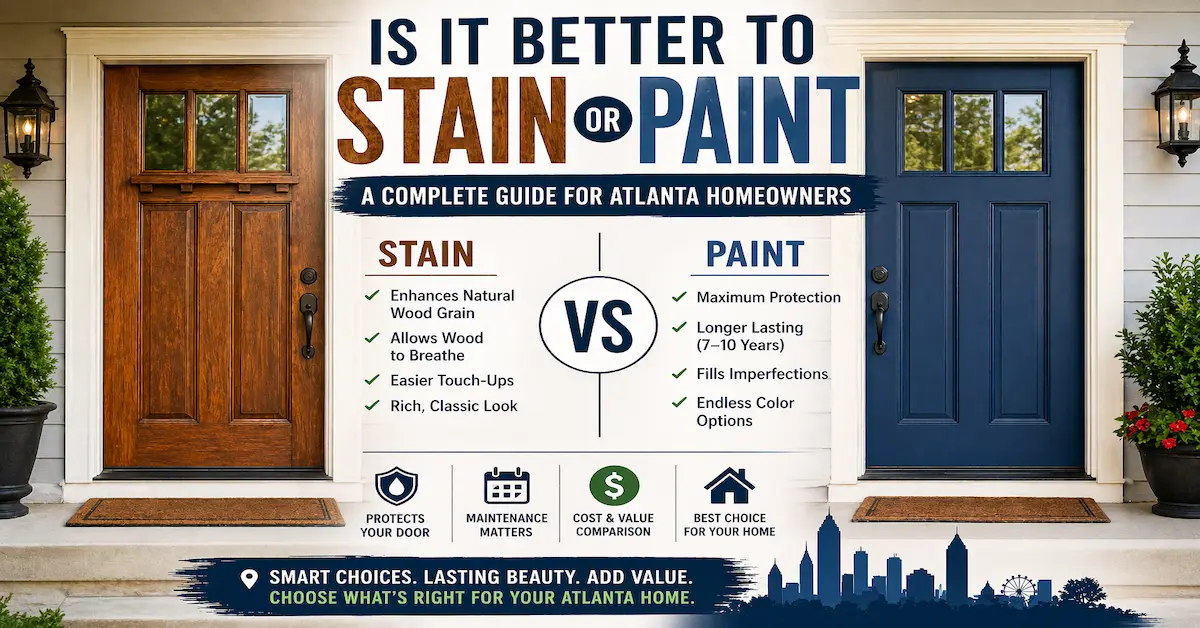
Your front door takes a beating from Atlanta’s humid summers and unpredictable winters. The finish you choose determines how long it lasts and how good it looks. According to the National Association of Realtors, replacing or refinishing a front door recovers about 90% of its cost in home value. That makes your choice between paint and stain worth getting right.
This guide walks through everything Atlanta homeowners need to know about door finishes. You’ll learn which option protects better, lasts longer, and fits your home’s style. We’ll also cover maintenance needs and cost differences to help you decide.
What’s the Real Difference Between Stain and Paint?
Stain soaks into wood fibers and changes the color while showing the grain. Paint sits on top of the wood and covers everything underneath. That basic difference affects durability, appearance, and maintenance for years to come.
Stain penetrates the wood surface and bonds with the fibers. This creates a finish that won’t peel or chip because there’s no thick layer on top. The wood grain stays visible, which many homeowners prefer for its natural look. Oil-based stains penetrate deeper than water-based versions.
Paint creates a protective layer over the wood. This layer fills small cracks and covers imperfections. The wood grain disappears completely under paint. Modern exterior paints use acrylic or latex bases that flex with temperature changes. That flexibility helps prevent cracking in Atlanta’s variable climate.
Which Finish Lasts Longer in Atlanta’s Climate?
Paint typically lasts 7 to 10 years before needing reapplication. Stain needs refinishing every 2 to 4 years depending on sun exposure and weather protection. Paint wins on longevity, but stain makes touch-ups easier when needed.
Atlanta’s humidity affects both finishes differently. Paint can trap moisture if applied incorrectly, leading to bubbling or peeling. Stain allows wood to breathe, which reduces moisture problems. The trade-off is that stain fades faster under direct sunlight.
Your door’s orientation matters too. South-facing doors in Atlanta get intense sun exposure. Paint holds up better in these conditions. North-facing doors stay shaded and protected, making stain a viable option. East and west exposures fall somewhere in between.
Pro Tip: If your door gets direct afternoon sun for more than four hours daily, choose paint for better longevity. For shaded entries, stain will perform well and require less dramatic maintenance.
How Does Each Option Protect Your Door?
Paint provides superior protection against moisture, UV rays, and temperature swings. The thick coating seals the wood completely. This prevents water penetration that causes rot and warping. Paint also fills minor surface imperfections that could trap moisture.
Stain offers moderate protection while maintaining the wood’s natural movement. Wood expands and contracts with humidity changes. Stain moves with the wood instead of cracking. However, stain doesn’t seal wood as completely as paint does.
| Protection Factor | Paint | Stain |
| Moisture Barrier | Excellent | Good |
| UV Resistance | Excellent | Moderate |
| Crack Prevention | Very Good | Excellent |
| Wood Breathing | Poor | Excellent |
For maximum protection, some homeowners use both. They stain the door first to enhance the grain, then apply a clear protective coating. This approach combines visual appeal with weather resistance. Professional door staining professionals can recommend the best combination for your specific door and exposure.
What Are the Aesthetic Differences?
Stain showcases wood grain and natural character. Different wood species create distinct patterns. Mahogany shows rich, straight grain. Oak displays prominent rays and texture. The stain color deepens these patterns without hiding them.
Paint completely transforms a door’s appearance. You can choose any color to match your home’s exterior. Paint works on any wood species since it covers everything. This makes paint ideal for doors with inconsistent grain or multiple wood types.
Atlanta’s traditional architecture often features stained doors on craftsman and colonial homes. Modern and contemporary styles lean toward painted doors in bold or neutral colors. Your neighborhood’s predominant style might influence your choice.
How Much Maintenance Does Each Finish Need?
Painted doors need washing twice yearly with mild soap and water. Check for chips or cracks annually. When paint fails, you must strip or sand the entire door before repainting. This makes maintenance less frequent but more intensive when required.
Stained doors need annual cleaning and inspection. Fading happens gradually, so you can varnish wooden door surfaces with a fresh coat without stripping. The process takes a few hours versus a full weekend for paint stripping. Stain maintenance is more frequent but much easier each time.
Both finishes benefit from regular hardware checks and weatherstripping updates. These simple tasks prevent moisture infiltration regardless of your finish choice. Proper maintenance extends the life of any door finish significantly.
What About Cost Considerations?
Paint costs $150 to $300 for DIY materials including primer, paint, brushes, and supplies. Professional painting runs $300 to $600 depending on prep work needed. The longer lifespan means lower annual costs despite higher upfront investment.
Stain costs $100 to $200 for quality products and application tools. Professional staining ranges from $200 to $400. You’ll spend this amount more frequently, but the work takes less time. Over 10 years, total costs end up similar between both options.
If you plan to refinish wood doors yourself, stain is more forgiving for beginners. Brush marks and application errors show less. Paint requires careful technique to avoid drips and uneven coverage. Many Atlanta homeowners find staining easier for DIY projects.
Which Finish Should Atlanta Homeowners Choose?
Choose paint if your door faces south or west, you want maximum protection, or your home’s style calls for specific colors. Paint makes sense for composite or lower-quality wood doors where grain isn’t worth showcasing. The longer intervals between refinishing suit busy homeowners.
Choose stain if you have beautiful wood worth displaying, your door stays relatively protected, or you prefer easier maintenance. Stain works well for covered entries and north-facing doors. It’s also better for historic homes where natural wood appearance matters.
Many homeowners in neighborhoods like door refinishing Buckhead areas prefer stain for its upscale appearance. Paint dominates in more modern Atlanta suburbs where bold colors define curb appeal.
Pro Tip: Can’t decide? Consider a test area. Many professional refinishers will show samples of both finishes on your actual door before committing to the full project.
Frequently Asked Questions
Common Questions About Door Finishing
Can you paint over a stained door?
Yes, but proper prep matters. Sand the stained surface to rough it up, then apply a quality primer. The primer blocks stain bleed-through and helps paint adhere. Skip these steps and your paint will peel within months.
Does stain need a topcoat?
Exterior doors always need a clear protective topcoat over stain. Polyurethane, spar varnish, or marine-grade sealers work well. The topcoat provides UV and moisture protection that stain alone cannot deliver.
How long does paint or stain take to dry in Atlanta’s humidity?
Paint needs 24 to 48 hours in humid conditions. Stain dries faster at 4 to 8 hours for touch-dry. Plan refinishing projects during spring or fall when humidity drops below 70% for best results.
Will paint or stain prevent my door from swelling?
Neither completely prevents swelling, but paint provides better moisture barriers. Proper sealing of all six door sides matters more than finish choice. Many swelling problems come from unsealed top and bottom edges.
Can I change stain colors without stripping?
You can only go darker without stripping. Lighter stain colors require removing the old finish completely. This takes chemical strippers or heavy sanding. Paint offers easier color changes with proper primer.
What happens if I skip primer before painting?
Paint will peel, especially on wood with tannins like oak or mahogany. Primer seals the wood, blocks stains, and creates a surface for paint to grip. Skipping it wastes time and money when the paint fails early.
Does paint or stain work better on fiberglass doors?
Paint works better on fiberglass since there’s no real grain to showcase. Some fiberglass has fake grain textures that look decent with stain, but paint provides superior adhesion and durability on synthetic materials.
Making Your Final Decision
Your door finish choice depends on protection needs, aesthetic preferences, and maintenance willingness. Paint delivers maximum durability for exposed locations. Stain showcases natural beauty and simplifies touch-ups. Both options work well when applied correctly and maintained properly.
Atlanta’s climate challenges both finishes differently. Consider your door’s sun exposure, your home’s architectural style, and how much time you want to spend on upkeep. There’s no universal right answer, just the right choice for your specific situation.