Your front door takes a beating. Sun, rain, wind, and constant use wear down even the toughest finish. According to the National Association of Home Builders, exterior wood doors need refinishing every 3-5 years depending on exposure and climate. Catching the warning signs early saves you from costly replacements and keeps your home looking sharp.
This guide breaks down the exact signals that your door needs attention. You’ll learn what to look for, why it matters, and when to take action.
What Are the Most Common Visual Signs Your Door Needs Refinishing?
Quick Answer: Fading color, peeling or cracking finish, visible wood grain through the coating, and uneven discoloration are the primary visual indicators that your exterior door requires immediate refinishing to prevent further damage.
Walk up to your door and take a hard look. The finish is your door’s armor against the elements. When that protection fails, you’ll see it.
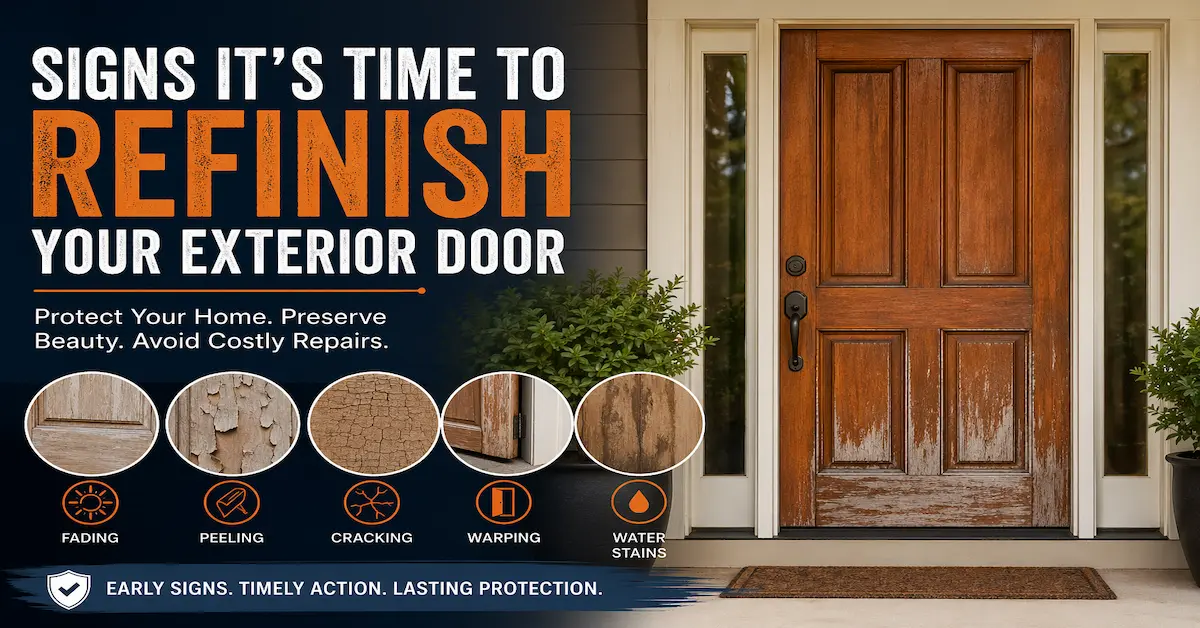
Fading and Color Loss
UV rays attack wood finishes relentlessly. If your door looked rich and vibrant two years ago but now appears washed out, the sun has broken down the protective layer. This happens faster on south-facing doors that get direct sunlight most of the day.
Professional staining wooden doors restores that depth of color while adding UV blockers.
Peeling or Flaking Finish
When you spot finish lifting away from the wood surface, moisture has gotten underneath. Peeling usually starts at the bottom of the door where water pools, then spreads upward. This creates a domino effect where more moisture enters, causing more peeling.
Don’t pick at it. That only speeds up the damage.
Cracking or Alligatoring
Those spiderweb cracks or patterns that look like alligator skin mean the finish has lost flexibility. Temperature swings make wood expand and contract. A brittle finish can’t move with it, so it fractures. Once cracking starts, water seeps in and warping follows.
How Do You Know If Your Door Has Structural Damage?
Quick Answer: Warping, swelling, visible gaps around the frame, difficulty opening or closing, and wood softness when pressed indicate structural damage requiring urgent refinishing or repair before replacement becomes necessary.
Visual problems are annoying. Structural issues threaten your home’s security and energy efficiency.
Warping or Bowing
Stand back and look at your door from the side. Does it curve outward or inward instead of sitting flat? Warping happens when moisture penetrates unevenly, making one side swell more than the other. This creates gaps that let drafts in and pests through.
A warped door rarely sits flush in its frame. You’ll notice light peeking through the edges even when it’s closed.
Swelling and Sticking
If your door suddenly drags against the frame or won’t latch properly, moisture has made the wood expand. This happens seasonally in humid climates, but constant sticking means the protective finish has failed completely.
Quality varnish for wood doors creates a moisture barrier that prevents this problem.
Soft Spots or Rot
Press firmly on different areas of your door, especially the bottom rail and corners. Healthy wood feels solid. Soft, spongy spots mean water has caused rot. This is serious. Rot spreads and weakens the entire structure.
Catch it early and refinishing might save the door. Wait too long and you’re looking at replacement.
What Weather-Related Damage Should You Watch For?
Quick Answer: Water stains, sun bleaching, finish bubbling, mold or mildew growth, and seasonal door movement indicate weather damage that compromises your door’s protective coating and requires professional refinishing intervention.
Mother nature doesn’t care about your door’s finish. She’ll strip it away year by year if you let her.
Water Stains and Discoloration
Dark streaks or blotchy areas show where water has soaked into bare wood. These stains go deep. They won’t disappear with cleaning because the water carried tannins and minerals into the wood fibers.
Water stains mean your finish has failed in those spots. The damage will spread outward from there.
Sun Damage and Graying
Wood exposed to UV light without protection turns gray. That silvery patina might look rustic on a fence, but it signals breakdown on your door. The sun has destroyed the lignin that binds wood fibers together. The surface becomes rough and splinters easily.
Bubbling or Blistering
Trapped moisture under the finish creates bubbles that look like blisters on skin. Pop one and you’ll find either water or bare wood underneath. This happens when finish is applied over damp wood or when water penetrates through cracks.
Blisters never heal on their own. They only grow and multiply.
When Should You Call a Professional for Door Refinishing?
Quick Answer: Contact professional door finishing services when you notice multiple damage signs, deep stains, structural issues, or if your door is over five years since its last refinishing.
Some homeowners tackle refinishing themselves. But professionals bring equipment, experience, and warranties that DIY can’t match.
Multiple Problem Areas
One small spot of peeling? Maybe you can touch that up. But if you’re seeing fading plus cracking plus water stains, you need a complete refinishing. Spot fixes on a failing finish just waste time and money.
High-Value or Antique Doors
Solid wood doors, custom designs, and historic doors deserve expert care. The wrong stripper or technique can cause permanent damage. Professionals at Door refinishing atlanta know how to handle specialty woods and preserve original character.
Time and Equipment Constraints
Proper refinishing requires stripping, sanding, staining, and multiple finish coats with drying time between each. Most people can’t leave their front door off the hinges for three days. Pros work efficiently and can often complete the job in one day.
Pro Tip: Take photos of your door every six months. Compare them to spot gradual deterioration you might miss seeing it daily. Early intervention saves money.
How Often Should Exterior Doors Be Refinished?
Quick Answer: Refinish exterior wood doors every three to five years in moderate climates, every two to three years in harsh sun or coastal environments, and annually inspect all doors for early damage signs.
| Climate Condition | Refinishing Frequency | Primary Threat |
| Moderate (covered entry) | 4-5 years | Normal wear |
| Full sun exposure | 2-3 years | UV damage |
| Coastal/high humidity | 2-3 years | Moisture damage |
| Extreme weather | 2 years | Combined assault |
Don’t wait for obvious damage. Preventive refinishing extends your door’s life far beyond reactive repairs.
Can You Prevent Door Damage With Regular Maintenance?
Quick Answer: Yes, regular cleaning, immediate touch-ups of scratches, keeping gutters clear, adding door overhangs, and applying fresh finish coats before damage appears significantly extends door life and reduces refinishing frequency.
An ounce of prevention beats a pound of cure. Simple habits protect your investment.
Clean Your Door Seasonally
Wash your door with mild soap and water every spring and fall. This removes dirt, pollen, and pollutants that break down finishes. Rinse thoroughly and let it dry completely.
Never use harsh chemicals or pressure washers. They damage both finish and wood.
Inspect After Storms
Heavy rain, hail, or wind can chip finish or drive water into vulnerable spots. Check your door within a day or two of severe weather. Address any new damage quickly before it spreads.
Keep Drainage Clear
Make sure water flows away from your door, not toward it. Clean gutters prevent overflow that cascades over your entrance. Grade soil so it slopes away from the foundation.
Standing water at your door’s threshold is a refinishing job waiting to happen.
What’s the Difference Between Refinishing and Replacing?
Quick Answer: Refinishing restores appearance and protection for $200-600 while preserving your existing door, whereas replacement costs $1,000-5,000 but becomes necessary only when rot, severe warping, or structural failure make refinishing ineffective.
Refinishing makes sense for most damage. But some doors have reached the end of their useful life.
When Refinishing Works
Surface damage, fading, minor cracks, and early water exposure all respond well to refinishing. If the wood structure remains sound, stripping and recoating brings the door back to like-new condition.
When Replacement Is Necessary
Extensive rot, severe warping that prevents proper closure, cracked or split rails, or damage covering more than 30% of the door usually means replacement. At that point, the cost of repairs approaches replacement cost anyway.
A professional can assess whether your door can be saved or should be replaced.
Frequently Asked Questions
FAQ Section
How long does exterior door refinishing take?
Professional refinishing typically takes one to two days including stripping, sanding, staining, and applying protective topcoats. DIY projects often require three to five days because most people can only work in short sessions and lack professional drying equipment.
Can I refinish my door without removing it?
Yes, but removing the door produces better results. Working horizontally prevents drips and allows complete access to all edges. If you must refinish in place, use careful masking and accept that the finish may be less uniform.
What causes white haze on refinished doors?
White haze or blushing occurs when moisture gets trapped in the finish during application. This happens in humid conditions or when applying coats too quickly. Proper temperature control and adequate drying time prevent this problem.
Is it cheaper to refinish or replace an exterior door?
Refinishing costs $200-600 on average while quality door replacement runs $1,000-5,000 including installation. Refinishing saves 60-80% compared to replacement when the door structure remains sound.
How do I know if my door is solid wood or veneer?
Check the top or bottom edge of the door. Solid wood shows consistent grain throughout the thickness. Veneer doors have a thin decorative layer over engineered wood core. Veneer doors can be refinished but require gentler sanding to avoid breaking through the veneer layer.
Can severely faded doors be restored to original color?
Yes, proper stripping and re-staining can restore original color to faded doors. The wood underneath retains its natural character. Deep graying from UV exposure requires extra sanding to remove damaged surface fibers before staining.
What finish lasts longest on exterior doors?
Marine-grade spar varnish or exterior polyurethane with UV inhibitors provide the longest protection, typically lasting 4-6 years in harsh conditions. Oil-based finishes penetrate deeper than water-based options and offer superior weather resistance.