From Faded Finish to Deep Cracks: Why Delaying Door Refinishing Costs More
Your front door does more than open and close. It protects your home. It creates a first impression. It also takes more abuse from weather than almost any other part of your house.
Sunlight. Rain. Humidity. Heat. Cold. All of it hits your door every single day.
At first, damage is subtle. A dull finish. Slight fading. A surface that no longer looks rich or smooth. Many homeowners ignore this stage because the door still “works.”
That delay is where problems begin.
Refinishing plays a key role in protecting the wood and reducing the risk of long-term damage. Once the protective finish wears away, the clock starts ticking. The longer you wait, the more the damage spreads beneath the surface.
Keep reading to learn why small door issues should never be ignored and how door refinishing at the right time makes all the difference.
What Protects a Wood Door
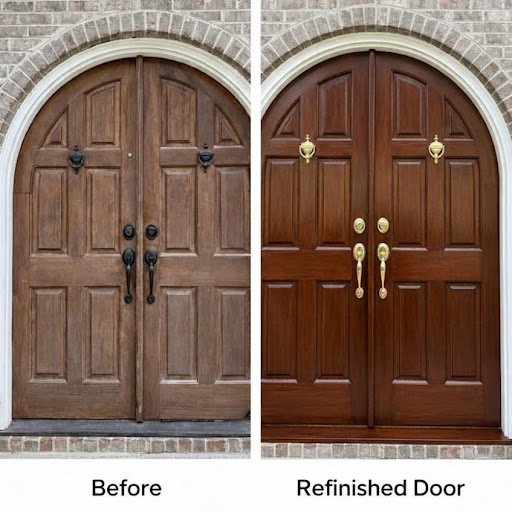
Most quality wood doors are sealed with a protective topcoat. This is often polyurethane or a similar clear finish. Its job is simple.
- List Item #1
- It filters sunlight.
- It slows temperature changes.
When that layer is intact, the wood underneath stays stable and strong.
Over time, this protective layer breaks down. UV rays weaken it. Rain and humidity wear it thin. Temperature swings cause expansion and contraction.
Once the finish fades or thins out, bare wood becomes exposed.
That exposure is the start of deeper problems.
So, What Happens When the Finish Starts to Fade
Fading is often the first visible warning sign. The color looks washed out. The sheen disappears. The surface may feel dry or rough to the touch.
At this stage, many homeowners assume it is a cosmetic issue.
It is not.
A faded finish means the protective barrier is failing. Sunlight can now reach the wood fibers. Moisture can soak in during rain or humid weather.
Wood reacts quickly when it loses protection.
- It dries out in the sun.
- It swells when wet.
- It shrinks again as it dries.
This repeated movement stresses the wood. And that stress leads to cracks.
When Hairline Cracks Turn Serious
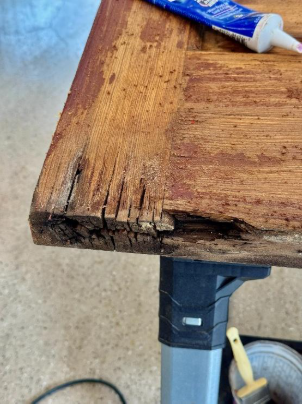
Once cracks deepen, they change the door in permanent ways.
Moisture gets deeper into the wood. The grain begins to separate. Edges and panels weaken.
Cracks may widen during humid seasons and shrink during dry months. This movement causes more splitting over time.
At this stage, door refinishing becomes more complex. Extra steps are required.
- Crack filling
- Structural repair
- Extended sanding
- Spot rebuilding damaged sections
Costs increase because labor increases.
In some cases, damage goes too far.
Why Moisture Is the Real Enemy
Sunlight gets most of the blame, but moisture does the most damage.
Rainwater enters through cracks. Humid air seeps into unsealed grain. Morning dew settles into exposed wood.
Moisture causes:
- Swelling
- Rot
- Mold growth
- Softening of wood fibers
Once rot begins, refinishing alone cannot fix it. Sections may need to be replaced or rebuilt. That increases cost and reduces the original material of the door.
Sealing the door early blocks moisture before it reaches this stage.
With that in mind, the next step is knowing what warning signs to look for before moisture damage takes hold.
Signs Your Front Door Needs Refinishing
Many homeowners are unsure when normal wear turns into a real problem. A front door does not always fail all at once. The warning signs usually appear slowly.
Below are the most common signs that your door needs refinishing. If you notice more than one of these signs, door refinishing should not be delayed.
Faded or uneven color
When a door’s color looks washed out or patchy, the protective finish is wearing away. Sun exposure is usually the cause. Once the color fades, the wood underneath is no longer shielded from UV damage.
Dull or chalky
finish
A healthy finish should feel smooth and slightly glossy. If the surface looks flat or leaves a powdery residue on your hand, the sealant has broken down. This often happens before cracks appear.
Rough texture
If the door feels rough or dry instead of smooth, the wood is starting to show through the finish. This roughness allows moisture to enter more easily and speeds up further damage.
Small surface cracks
Fine cracks in the grain are an early warning sign. They form when parts of the door expand and contract at different rates. At this stage, refinishing can still seal the wood before the cracks deepen.
Dark spots near edges or panels
Dark areas often appear where water collects, such as along the bottom edge or around decorative panels. These spots can indicate moisture absorption and should be addressed quickly.
Water stains after rain
If stains appear after rainfall, the finish is no longer repelling water. Repeated exposure like this leads to swelling, cracking, and long-term structural issues.
Wood that feels dry or brittle
Wood should have some natural flexibility. When it feels stiff or fragile, it has lost moisture balance. Refinishing helps restore protection and prevents splitting.
Why Delaying Refinishing Always Costs More
Some homeowners delay refinishing to save money. In reality, the delay often doubles or triples the final cost.
Early refinishing involves:
- Light sanding
- Surface prep
- New protective coats
Each stage of damage adds cost. None of it improves the door.
Delayed refinishing involves:
- Crack repair
- Structural stabilization
- Extensive sanding
- Possible wood replacement
- More labor hours
Addressing the problem early keeps work simple and affordable.
The Point Where Refinishing Is No Longer Enough
There is a tipping point.
When cracks become deep and widespread, the door may lose its structural integrity. Panels loosen. Stiles and rails weaken. Warping becomes noticeable.
At this stage, homeowners often hear the words they hoped to avoid.
Replacement
This is where the cost difference becomes very real.
Door refinishing vs replacement is not a small comparison. A quality wood door replacement can cost several times more than refinishing. Installation adds more expense. Matching style and finish becomes another challenge.
Many replacements happen simply because refinishing was delayed too long.
Door Refinishing vs Replacement
The moment damage shows up, the decision becomes more serious.
Door refinishing vs replacement comes down to timing and condition.
Most doors qualify for refinishing far longer than homeowners realize. The problem is waiting too long to act.
Refinishing is ideal when:
- The door structure is still solid
- Cracks are shallow and limited to the surface
- There are no signs of rot or deep moisture damage
Replacement
- Cracks are deep or spread across large areas
- Rot has weakened the wood
- There are no signs of rot or deep moisture damage
How Climate Affects Door Damage
In humid regions, moisture damage accelerates. In hot sunny areas, UV damage dominates. In colder climates, freeze and thaw cycles stress the wood.
In cities like Atlanta, heat and humidity work together. Moist air penetrates exposed wood quickly. The sun dries it out again. This cycle speeds up cracking.
That is why door restoration Atlanta services often focus on sealing and protection as much as appearance.
Climate should guide maintenance schedules. Hot and humid areas require more frequent inspection.
Why Experience Makes the Difference in Door Refinishing
Small touch ups at home can improve how a door looks for a short time. Real protection takes more than a brush and a weekend. That is where professional refinishing shows its value.
An experienced refinishing team like the one at Door4Life knows how wood reacts to heat, moisture, and seasonal changes common in the Atlanta area. They sand only as much as needed, protect the grain, and choose sealers that match the local climate. Each coat is applied with the right thickness and given proper time to cure.
When refinishing is rushed or uneven, moisture can get trapped beneath the surface. Some areas stay exposed while others seal too tightly. Over time, that imbalance leads to cracking, peeling, and early finish failure.
This careful, step by step approach is the standard at Door4Life. Every panel, edge, and joint is sealed evenly to help doors last longer and stay solid.
How Often a Door Should Be Refinished
There is no fixed timeline for refinishing a door. Exposure to sun and weather plays a bigger role than the door’s age.
A front door that sits in direct sunlight will usually need attention sooner than one protected by shade or an overhang. Heat, rain, and humidity slowly wear down the finish over time.
Instead of relying on the calendar, it helps to check the door once a year. Look closely at the finish and pay attention to how the surface feels. If anything seems off, it may be time to take a closer look.
Door Refinishing vs Replacement
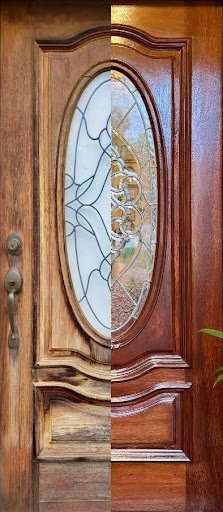
Refinishing does more than protect the surface of a door. It helps preserve the investment already made and reduces the risk of larger expenses later.
A refinished door improves curb appeal
A clean, restored finish makes the entryway look cared for and welcoming. Color depth and smooth texture help the home present well from the outside.
Proper refinishing helps support home value
Exterior details influence how a home is judged. A well maintained front door signals regular upkeep and attention to detail.
Early refinishing reduces future repair costs
Sealing the wood before damage spreads helps prevent cracking, moisture intrusion, and costly structural repairs.
Refinishing extends the usable life of the door
Restoring protective layers slows wear and allows quality wood doors to remain in service for many more years.
Timely refinishing helps avoid full door replacement
Addressing surface damage early reduces the chance of severe deterioration that would require replacing the entire door.
Protect Your Door Before Damage Takes Hold
Wood doors hold up well when they are cared for. When maintenance is ignored, even strong doors begin to break down over time.
Door refinishing is not an extra step or an afterthought. It is how a door stays sealed, stable, and protected from the elements. Addressing wear early keeps small surface issues from turning into costly repairs.
The shift from a faded finish to deep cracks does not happen overnight. It follows a clear pattern. Acting early keeps damage limited and easier to fix.