
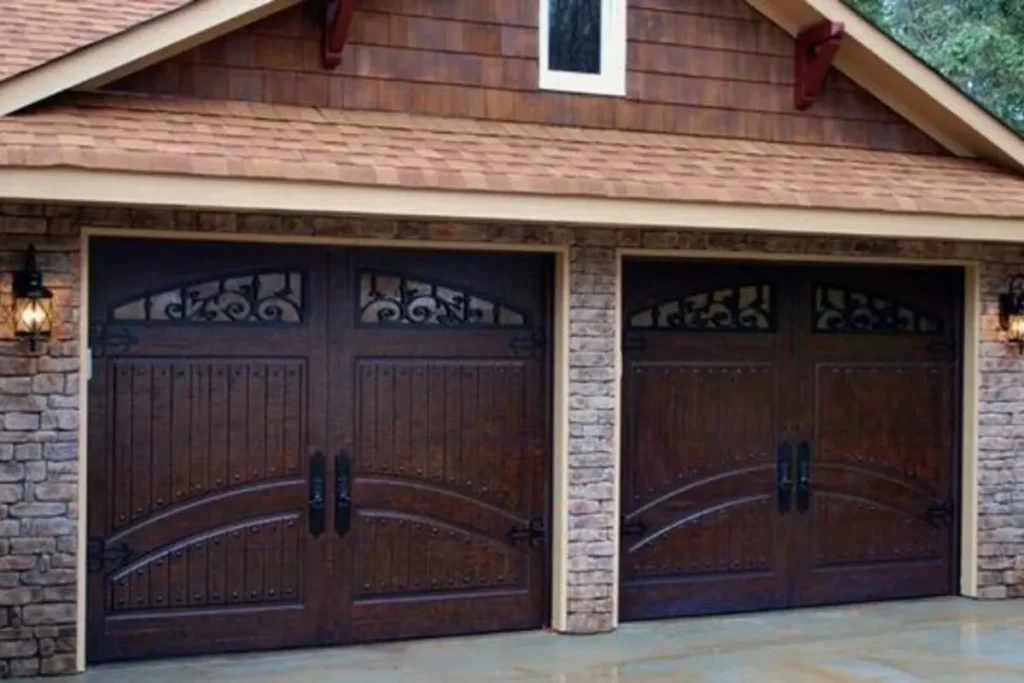
Are you confused about selecting the best stain for your garage door? You spent good money on a wood garage door. It looked incredible when it was first installed. Rich grain, warm color, strong and solid. Now, two or three summers later, the color has bleached out in patches, the surface feels rough and dry, and there are dark streaks near the bottom from rain and sprinkler overspray. It happens faster than most people expect, and Georgia‘s climate is one of the main reasons why.
Heat pulls moisture right out of wood and breaks down any finish that is not built for serious UV exposure, the humidity and the seasonal rain. Choosing the wrong stain or applying the right one incorrectly means the door looks worn out again within a year.
This guide covers which stains actually work for Georgia’s conditions, how to apply them properly, and how to keep your garage door refinishing results looking sharp for years, not months.
Types of Stain: Which One Is Right for Your Door?
There are four main stain types used on wood garage doors. Each one behaves differently in Georgia conditions.
| Stain Type | Wood Grain Visibility | UV Protection | Best For |
| Transparent / Clear | Full grain shows through | Low to moderate | New doors in shaded areas |
| Semi-transparent | Grain shows with color | Moderate | Cedar and fir in partial sun |
| Semi-solid | Grain partially visible | Good | Doors with light surface wear |
| Solid / Opaque | Grain hidden | Excellent | Doors with significant fading or damage |
| Oil-based penetrating | Full grain preserved | High (with UV additives) | South and west-facing doors in Georgia |
For most Georgia homeowners with cedar or Douglas fir garage doors that get direct sun, a 100 percent oil-based penetrating stain with UV protection is the strongest choice. It soaks into the wood fibers rather than sitting on top, which means it moves with the wood instead of cracking as the door expands and contracts through the seasons.
Water-based stains dry faster and are easier to clean up, but they sit more on the surface and tend to require reapplication more often in high-UV climates. They are a reasonable choice for shaded or north-facing doors.
Top Stain Products That Hold Up in Georgia
Not all stains sold at big-box stores are built for the intensity of Southern summers. These are the products that consistently perform well on Georgia garage doors:
Old Masters Gel Stain works especially well on vertical surfaces because the thick gel formula does not run or sag. It delivers deep, even color that highlights the natural grain and does not require constant touch-ups. Apply it with a brush or rag and wipe off the excess before it sets.
Sikkens Cetol HLS Plus is a semi-transparent penetrating stain that goes deep into the wood grain. It is specifically formulated for UV exposure and has a flexible finish that handles temperature-related wood movement well. It is one of the most recommended stains among professionals working in Georgia’s climate.
Defy Extreme Wood Stain is a water-based option that performs above average for its category. It resists mildew, handles UV exposure better than most water-based stains, and goes on cleanly. It suits homeowners who want faster dry times without completely sacrificing durability.
TWP 100 Series is an oil-based penetrating preservative that protects against moisture, UV damage, and mildew. It is a strong choice for doors with any history of water staining or discoloration near the bottom edge.
For affordable door staining that does not mean cutting corners on product quality, any of these options beats a generic hardware store stain applied over an unprepared surface.
How to Apply Stain to a Wood Garage Door: Step-by-Step
Step 1: Assess the Current Condition
Start by figuring out what is already on the door. Run your hand across the surface. If the grain is visible through the existing finish, the door likely has a transparent or semi-transparent stain. If the grain is hidden, a semi-solid or painted finish is covering it. Knowing this helps you pick a compatible new product.
If the existing finish is peeling, cracking, or bubbling, it needs to come off completely before any new stain goes on.
Step 2: Clean the Door Properly
Before anything else, clean the surface. Use a 50/50 mix of bleach and water applied with a hand pump sprayer. Work it across the entire door to lift mildew, grime, and biological staining. Let it sit for ten minutes, then rinse it off thoroughly with a garden hose.
Do not power wash a wood garage door. Cedar and Douglas fir are soft enough that high-pressure water cuts into the grain and leaves streaks that show clearly once stain is applied. A hand pump and hose give you all the cleaning power you need without damaging the surface.
For stubborn spots, increase the mix to 75 parts bleach and 25 parts water and repeat.
After rinsing, let the door dry for 48 to 72 hours before moving forward. Staining over damp wood causes the finish to trap moisture inside, which leads to premature failure.
Step 3: Sand the Surface
Once dry, sand the door lightly with 120-grit sandpaper. This removes surface gray, opens the grain for better stain penetration, and creates a consistent texture across the whole door. Move with the grain, not against it.
For refinishing a wooden door with carved panels or detailed moldings, use a sanding sponge on those areas to keep the contours intact.
Wipe the surface down with a dry microfiber cloth after sanding. Every bit of dust left on the surface will show up in the stain.
Step 4: Apply Wood Conditioner
This step matters more on softwoods like cedar than it does on hardwoods. Cedar has an uneven grain density — some areas absorb stain fast, others are slow. Without conditioner, you get a blotchy, uneven color that no number of extra coats will fix.
Apply the conditioner with a clean cloth, let it soak in for the recommended time, then wipe away what the wood did not absorb. Now the surface accepts stain evenly from edge to edge.
Step 5: Apply the Stain in Thin, Even Coats
Work from top to bottom in the direction of the wood grain. Use a natural bristle brush for oil-based stains and a synthetic brush for water-based products. Apply a thin, even coat — do not try to build heavy color in one pass.
Let the stain penetrate for a few minutes, then wipe away excess before it tacks. Leaving excess stain on the surface causes sticky patches and uneven sheen once it cures.
For most oil-based penetrating stains on cedar, one to two coats is standard. Check the manufacturer’s recommendation for your specific product. Two thin coats almost always give a better result than one thick one.
Step 6: Apply a Protective Topcoat
Stain alone is not enough for a south-facing door in Georgia. Varnishing a wooden door with a UV-resistant topcoat is what keeps the color locked in and the wood sealed against rain and heat.
Use a marine-grade spar urethane or an exterior-grade UV-resistant polyurethane. Apply two to three coats, lightly sanding with 220-grit between each one after it dries. This gives you a smooth, layered barrier that flexes with the wood and resists sun damage.
This is the same principle behind a high-quality door finish on front doors; the stain creates the look, but the topcoat is what makes it last. Door4Life uses marine-grade UV urethane on every project for exactly this reason.
Why Georgia’s Climate Is Hard on Wood Garage Doors?
Georgia sits in a climate zone with high UV intensity from spring through fall, humidity levels that regularly push above 70 percent, and warm temperatures that cause wood to expand and contract constantly. That movement creates tiny cracks in any finish that lacks flexibility. Once those cracks form, moisture gets in, the wood darkens and swells, and the stain starts to lift. Most homeowners think a garage door stain fails because of the product. Usually, it fails because the product was not matched to the conditions it was going up against.
Cedar and Douglas fir are the two most common wood species used in garage doors. Both are softwoods, meaning they absorb stain more readily than a hardwood like oak or mahogany. That is a good thing for penetration depth, but it also means they dry out faster under intense sun and need a finish with strong UV blockers built in.
Doors facing south or west get the hardest exposure. If your garage door faces either direction, factor that into how often you plan to reapply.
How Often Should You Restain a Wood Garage Door in Georgia?
For most Georgia homeowners, every two to three years is a realistic maintenance cycle for a properly stained and sealed garage door. Doors with south or west exposure may need attention closer to every two years. Doors in shade or with high-quality oil-based finishes can often go three to four years between full restaining.
The key is catching it early. Once the color starts to look uneven or the surface feels dry to the touch, a light sand and a fresh maintenance coat is all it needs. Wait until the finish is cracking or peeling, and you are back to a full strip-and-restain job.
For exterior door refinishing in Alpharetta and the surrounding areas, Door4Life recommends a professional inspection every two years to catch wear before it becomes real damage.
Oil-Based vs. Water-Based: Which One Should You Choose?
| Feature | Oil-Based Stain | Water-Based Stain |
| Penetration depth | Deep into wood fibers | Surface level |
| Drying time | 24 to 48 hours | 1 to 4 hours |
| UV resistance | Strong with UV additives | Moderate |
| Color richness | Deep and warm | Lighter and more natural |
| Flexibility | Moves with the wood | Less flexible over time |
| Maintenance frequency | Every 3 to 5 years | Every 2 to 3 years |
| Best for Georgia conditions | South and west-facing doors | Shaded or north-facing doors |
For most wood garage doors in direct Georgia sun, oil-based penetrating stain is the stronger long-term choice. Water-based stains have their place, particularly for homeowners who want easier cleanup and faster turnaround, but they need more frequent reapplication to maintain the same level of protection.
Common Staining Mistakes That Cost You Time and Money
Skipping the cleaning stage. Applying stain over a door with mildew or grime buildup means the product bonds to the contamination, not the wood. The finish fails faster and looks patchy from day one.
Staining over a damp surface. Moisture trapped under the stain causes it to bubble and lift within weeks. Give the door the full 48 to 72-hour drying window after washing, no shortcuts.
Using an indoor stain outside. Interior stains are not formulated for UV exposure or temperature swings. They break down quickly when used outside and offer almost no protection against Georgia’s climate.
Applying too much stain at once. Thick coats do not penetrate — they sit on top, which leads to tackiness, uneven sheen, and early peeling. Thin coats that soak in properly always outlast heavy applications.Choosing color without testing first. The stain looks very different on raw cedar than it does on the card at the store. Test a small area and let it dry before committing to a full application.