
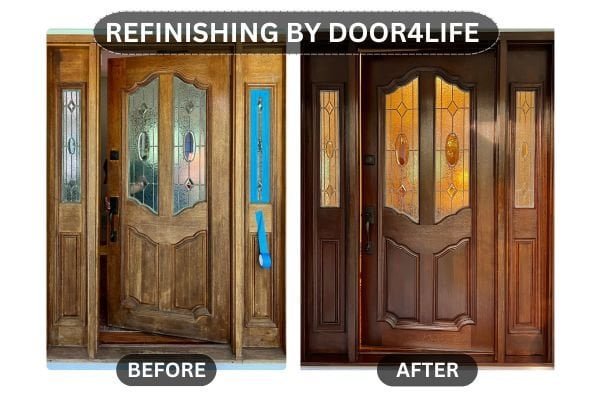
You walk up to your front door every single day. You know it used to look rich, warm, and solid. But somewhere, the finish cracked, the color went dull, and now it looks old. Georgia‘s heat and humidity do not go easy on wood. UV rays bleach the color out. Moisture creeps into open grain and starts doing real damage under the surface. And once a wooden door starts to go, it moves fast.
The good news? Most wood doors do not need replacing. What they need is a proper refinishing, one that goes deep, fixes the damage, and locks in real protection. Not a quick coat of varnish over a bad surface. A real process, done in the right order.
This is that process. Nine steps, explained clearly, so you know exactly what good refinishing a wooden door actually looks like from start to finish.
What You Need Before You Start
| Item | Purpose |
| Chemical stripper or eco-friendly gel | Removes old failing finish completely |
| 80, 120, and 220-grit sandpaper | Progressive smoothing at each stage |
| Orbital sander + sanding sponge | Flat areas and detailed carved panels |
| Wood conditioner | Opens grain for even stain absorption |
| Exterior-grade wood stain | Adds color and depth to the bare wood |
| Marine-grade UV-resistant urethane | Final protective armor against sun and rain |
| Natural bristle brush and lint-free rags | Clean application without brush marks |
| Drop cloths, painter’s tape, gloves, and goggles | Workspace and personal protection |
| Sawhorses | Keeps the door flat and accessible |
The 9-Step Wood Door Refinishing Process
Step 1: Take Off All Hardware
Pull every piece of metal off the door before you do anything else. That means the handle, deadbolt, hinges, kick plate, door knocker, and any decorative trim. Stain and stripper will discolor or damage metal if it gets underneath, and painter’s tape does not seal tightly enough around door hardware to keep it clean.
Store the hardware in a labeled bag. If the hinges or handle look worn, this is the moment to replace them. You get one chance to start fresh, use it well.
Also, score around each hardware piece with a utility knife before removal. This stops the old finish from pulling away in long strips when the metal comes off, which leaves uneven gouges that show through the stain.
Step 2: Remove the Door and Set Up Your Workspace
Take the door off its hinges and lay it flat across two sawhorses. This single decision changes the quality of your results. Working vertically lets gravity pull stain and topcoat downward before they set. Working flat keeps everything even.
Pick a spot with good lighting; natural light is best. It shows every scratch, hollow, and uneven area that artificial light hides. Bad lighting causes people to miss problems in the wood and only see them after the stain goes on. Set down drop cloths and seal the open doorway with plastic sheeting to keep your home protected and dust-free.
Step 3: Strip the Old Finish Completely
This is the step that separates a result that lasts three years from one that lasts a week. Exterior door refinishing in Alpharetta and across Atlanta demands complete finish removal because Georgia’s climate is tough on any topcoat that sits over compromised wood.
Apply the chemical stripper in sections using a brush, working it in generously. Give it the full recommended dwell time. Use a plastic scraper to lift the softened finish, never a metal one on raw wood. Wipe residue away with mineral spirits or a neutralizing wash and repeat any section where the old finish resists.
Do not leave a single gray or flaky patch. Every spot you miss will show up later as a blotch under the stain.
Step 4: Inspect and Repair the Wood
Once the door is stripped bare, give it a proper look in full daylight. Press your fingers into suspicious areas to check for soft spots. Soft wood means moisture has already worked its way in. Minor rot, nail holes, and surface cracks all need filling before sanding begins.
Use an epoxy-based wood filler for soft or rotted areas and a standard wood filler for small surface holes and dents. Apply filler slightly proud of the surface; it shrinks as it cures. Let it dry fully, then sand it flush. Skipping repairs here means the stain will sink unevenly into weak areas and make them more visible, not less.
Step 5: Sand in Three Stages
Start with 80-grit to cut through any remaining finish, level filler patches, and knock down rough grain. Switch to 120-grit once the surface is even, working the same areas more lightly. Finish with 220-grit for a smooth, consistent texture that stain can soak into properly.
Always move with the grain and never across it. Sanding across the grain leaves scratches that become very obvious once the stain hits the wood. For carved panels, molded edges, or detailed door panels, put down the orbital sander and use a sanding sponge. It follows the shape of the wood without flattening the contours.
After each grit change, wipe the door with a dry microfiber cloth and check the surface in strong light. If you can still feel rough patches, go back before moving forward.
Step 6: Apply Wood Conditioner
This step gets skipped constantly and causes more ruined finishes than almost anything else. Wood conditioner soaks into the grain and creates an even base for stain absorption. Without it, dense areas of the grain drink less stain and open areas drink more. The result is a blotchy, uneven color that no amount of extra coats will fix.
Apply the conditioner with a clean cloth, let it penetrate for the full recommended time, then wipe off the excess. Now every part of the door surface will accept stain at the same rate. For affordable door staining that looks expensive, this prep step is the reason professional results look so different from DIY ones.
Step 7: Apply Two Coats of Stain
Choose an exterior-grade stain rated for outdoor use. Interior stains are not formulated for UV exposure or temperature swings and will break down within one season outside.
Use a lint-free rag or a natural bristle brush and work from the top of the door downward, following the grain. Apply the stain in long, smooth strokes. Let it sit for two to three minutes, longer if you want a deeper color, then wipe off the excess with a clean dry cloth before it tacks up.
Let the first coat dry completely. This can take one to two hours, depending on temperature and humidity. Then apply the second coat the same way. Two coats build color depth that a single coat cannot achieve. The grain comes alive with a warmth and richness that makes wood look genuinely beautiful rather than painted.
For garage door refinishing, this same two-coat approach works well, just factor in the larger surface area and work in sections to keep a wet edge.
Step 8: Seal With Moisture-Blocking Base Coat
Before the UV topcoat goes on, apply a moisture-blocking sealant that locks the stain in and creates a barrier against water. Georgia’s humidity is relentless. Without this layer, moisture eventually works into the grain between topcoat applications and causes the color to lift.
Apply the sealant with a clean brush in even, thin passes. Pay close attention to the door’s bottom edge and any joints; these are the areas that absorb standing water first. Let it cure completely before moving to the topcoat stage.
This base seal is also what makes varnishing a wooden door actually work long-term. The urethane topcoat bonds better to a sealed surface than it does directly over bare stain.
Step 9: Apply UV-Resistant Topcoat in Multiple Coats
The final layer is what stands between your work and everything the weather throws at it. Use a marine-grade or UV-resistant urethane, the same type of protective finish used on outdoor wooden structures built to take serious sun and moisture exposure. Standard interior polyurethane will yellow and peel outside within a year.
Apply the first coat with a clean brush in smooth, overlapping strokes. No rushing. Thin coats cure better and stick harder than thick ones. Once dry, lightly sand with 220-grit to key the surface for the next coat. Wipe away all dust. Apply coat two.
For a high-quality door finish that holds up for several years, Door4Life applies four full coats of marine-grade UV urethane on every project. Each coat adds thickness, durability, and depth to the final surface. When the last coat cures fully, reinstall your hardware and hang the door back in its frame.
How Long Does Each Step Take?
| Step | Task | Time Needed |
| 1 | Remove hardware | 20 minutes |
| 2 | Take down the door and set up the workspace | 30 minutes |
| 3 | Strip the old finish | 1.5 to 2 hours |
| 4 | Inspect and fill damaged areas | 45 minutes + cure time |
| 5 | Sand in three stages | 2 to 3 hours |
| 6 | Apply wood conditioner | 30 minutes + soak time |
| 7 | Stain, two coats with drying | 3 to 4 hours |
| 8 | Moisture-blocking base seal | 1 hour + dry time |
| 9 | UV topcoat — multiple coats | 3 to 6 hours |
Total time across a full day or two, depending on drying conditions.
Why the Order of Steps Matters
A lot of people grab a can of stain and get started without understanding why their results look patchy, bubble up, or peel within a season. The reason is almost always skipped steps or wrong order. Each step in this process builds on the one before it. Strip before sand. Condition before stain. Seal before the topcoat. Rush any stage, and the whole thing falls apart faster than the original finish did.
How to Protect Your Finish After the Job Is Done
Refinishing is an investment. Protect it with a little routine care, and it will last years longer than a neglected finish.
- Wipe the door monthly with a damp microfiber cloth to remove pollen and grime
- Never use bleach, ammonia, or abrasive cleaners on the surface
- Apply a fresh maintenance conditioner once a year to keep the topcoat flexible
- Get a fresh coat of UV urethane every two to three years before the finish starts to dull
- Check the door’s bottom edge every season, standing water pools there first
Doors on the south or west side of a house take the hardest UV hit and will need maintenance attention on the earlier end of that range.